
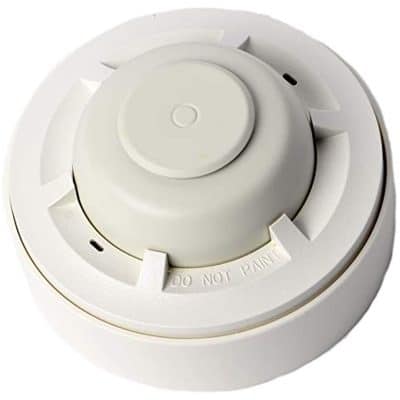
Common examples include kitchens, garages, attics or crawl spaces. Heat detectors come in 3 main types. Fixed Temperature heat detectors, Rate-of-Rise detectors and Combination heat detectors. Available in both hardwired models; often integrated into a buildings fire alarm system and battery-powered version suitable for standalone use.
Heat detectors are essential in spaces with dust, steam or smoke from cooking. They offer a reliable solution for minimizing false alarms while still providing vital fire protection. To safeguard your family or business against fire hazards, choose the right type of heat detection for each area of your property. Understanding how and where to use heat detectors is crucial for comprehensive fire safety planning. Helping to ensure an effective early warning and enhance overall building safety.
What Is a Heat Detector?
The purpose of a heat detector is to ensure fire safety for you and others. These devices help to know 100% if there is a fire within the building you are present with. They detect fire through the temperature change in the air, rather than detecting smoke. This way they are more accurate and can help prevent false alarms and evacuations.
When comparing heat detectors to other fire detection devices, it’s important to understand their unique functions and ideal applications. Heat detectors respond to temperature changes, making them well-suited for environments where dust, humidity or fumes might trigger false alarms in smoke detectors. Smoke detectors sense airborne particles from combustion. while smoke detectors generally provide earlier warnings in office and residential settings, heat detectors deliver greater reliability in harsher or more volatile conditions.
What Are Heat Detectors Used For?
In residential, commercial and industrial settings, people commonly install heat detectors in rooms with cooking and high humidity. In commercial and industrial spaces, they help protect areas with heavy equipment, high heat output or airborne contaminants. Facilities like commercial kitchens, manufacturing plants and storage areas benefit especially from these detectors. In these environments, smoke detectors might trigger unnecessary alarms. When property owners place heat detectors in the right locations, they improve fire safety in challenging conditions.
These devices don't typically provide early warning, but they play an essential role in spaces that require consistent fire detection.
What Do Heat Detectors Do?
Heat detectors function by monitoring the ambient temperature in a space and responding when it reaches a dangerous level or changes rapidly within a short time. These devices typically contain heat-sensitive elements such as bimetallic strips or thermocouples that react to heat changes. They prompt the detector to respond when fire conditions are present
Once they trigger, heat detectors either sound a built-in alarm (in standalone models) or send a signal to a central fire alarm system. This signal may activate sirens, emergency lighting or sprinkler systems. These factors are dependent on the setup. In monitored systems, the system also sends the alert to emergency services or building management for immediate response.
How Do Heat Detectors Work?
Heat detectors operate based on simple but effective thermal sensing mechanisms designed to identify unusual increases in temperature. When the surrounding temperature exceeds certain limits or rises too quickly, components undergo a physical change. Such as expansion, bending or a change in electrical resistance. This triggers the detectors’ alarm function. Unlike smoke or flame detectors, which rely on optical or chemical sensors, heat detectors depend solely on temperature changes, making them highly stable and resistant to environmental interference.
3 main types of heat detectors exist, each serving specific applications. Fixed Temperature heat detectors are the most common and activate when the ambient temperature reaches a pre-set level. These detectors often use a fusible element or a sensor that permanently changes state once the temperature exceeds the threshold. They work well in spaces where gradual heat buildup typically occurs during a fire, where minimizing false alarms is important.
Rate-of-Rise (ROR) heat detectors, on the other hand, respond more quickly to fast-developing fires. Instead of waiting for the temperature to reach a fixed point, they react when the temperature rises rapidly-usually around 12–15°F per minute. This quick response makes them especially useful in areas where fires can spread quickly without immediately producing smoke. Such as workplaces or storage rooms with flammable materials.
Some detectors combine both technologies into Combination heat detectors. Offering enhanced protection by detecting either a rapid rise in temperature or the reaching of a set temperature point. These versatile devices are beneficial in environments with variable conditions. Providing broader coverage and greater reliability in fire detection without the sensitivity issues of smoke alarms.
What Temperature Do Heat Detectors Go Off At?
Manufacturers design heat detectors to activate at specific temperature thresholds, which very based on the model and intended use. Most fixed temperature heat detectors activate at 135°F (57°C). However, in environments with naturally higher ambient temperatures, such as attics or industrial facilities, experts recommend detectors with higher activation points, like 194°F (90°C) or more. These preset temperatures keep the detector inactive during normal conditions but ensure it responds reliably when fire-related heat occurs.
The activation threshold also varies depending on the type of detector. Some heat detectors don’t rely on a single temperature point. Others monitor both fixed thresholds and rapid increases, offering a broader range of sensitivity. Choosing the appropriate threshold is essential and often depends on the normal temperature range of the environment. Ensuring accurate detection without unnecessary alarms.
When Are Heat Detectors Required?
Fire safety codes and standards, particularly those set by the National Fire Protection Association (NFPA) and enforced through local building or fire codes, require heat detectors in certain settings. These regulations often mandate installing heat detectors in areas where smoke detectors might prove ineffective or cause false alarms. For example, NFPA 72, the National Fire Alarm and Signaling Code, guides where to use heat detection-especially in spaces with high dust, humidity or airborne particles that can interfere with smoke detectors.
Local authorities having jurisdiction (AHJs) may also impose specific rules requiring heat detectors in mechanical rooms, storage facilities and similar spaces. In residential construction, although smoke alarms remain more common, local codes often require or strongly recommend heat detectors in attached garages, boiler rooms or unfinished basements. Meeting these codes goes beyond legal compliance; it ensures fire detection systems address the unique risks of each environment. Consulting local codes and fire officials during construction or renovation helps property owners install heat detectors where regulations and safety demand them.
How to Test a Heat Detector:
Always test a heat detector according to the manufacturer's instructions to ensure accuracy and prevent damage. Unlike smoke detectors, which you can test with aerosol sprays or built-in buttons, heat detectors often require specialized tools or controlled heat sources. Some models include a test feature that you can access with a magnet or remote tester. While others need a heat gun or specially designed test equipment to safety simulate rising temperatures. Always check and follow the approved testing method provided by the manufacturer before beginning.
Routine maintenance and regular testing keep heat detectors functioning properly over time. Most manufactures recommend testing heat detectors at least once a year, though some commercial systems require more frequent inspections based on local fire codes or insurance policies. In addition to testing, inspect each detector visually for dust buildup, corrosion or physical damage. If you include a heat detector in a larger fire alarm system, the end of its rated service life, typically between 5-15 years, to ensure continued reliability.
Heat Detectors vs. Smoke Detectors:
Smoke detectors are ideal for a fast warning a fire may be present. They are perfect for areas like bedrooms and/or offices where early detection is critical. In contrast, heat detectors respond to temperature changes and work best where false alarms may be present. While smoke detectors react more quickly to slow, smoldering fires, heat detectors offer more stability in harsh conditions. Ideally, you should use both types together as part of a complete fire detection system. Smoke detectors for early warning and heat detectors for added protection in environments that challenge smoke detection reliability.